The New Sex Crime Hiding Behind a Screen: AI Deepfakes, Consent and the Law Finally Catching Up
©️ By Sophie Lewis | Sophie Editorial
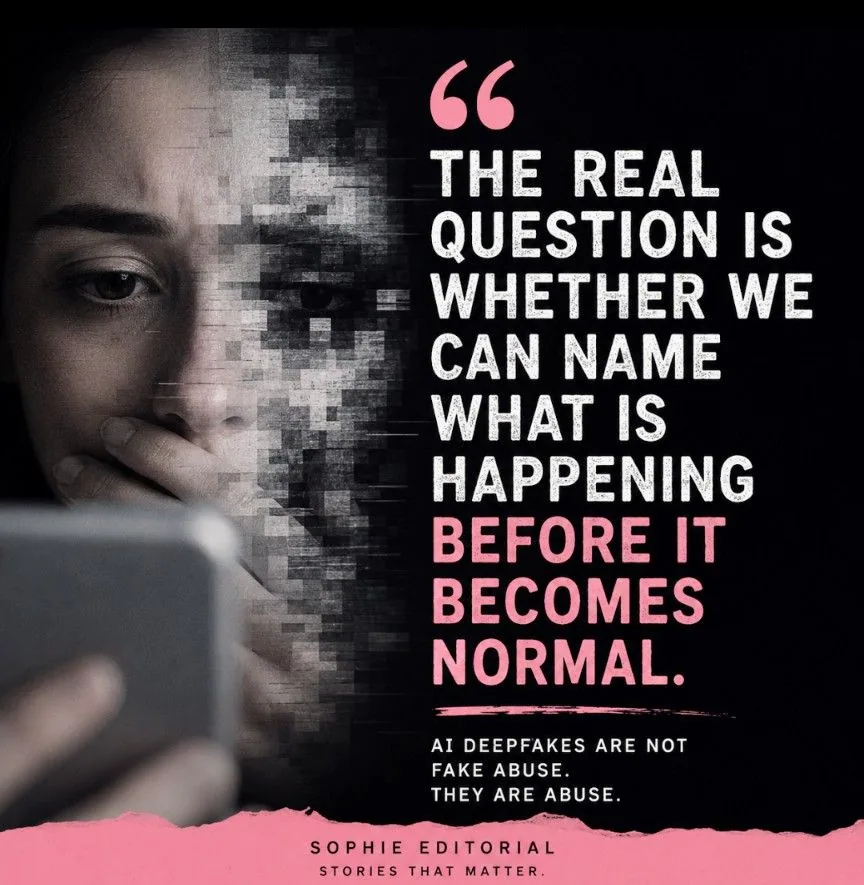
A woman opens her phone and sees herself naked online.
Except it is not her body.
Her face has been digitally stitched onto somebody else’s. The image is fake, but the humiliation is real. The panic is real. The fear is real. And increasingly, so is the law.
For years, deepfake technology sat in the background of internet culture like a strange futuristic gimmick. Celebrities appeared in fake videos. Politicians were edited into speeches they never gave. People laughed at AI-generated memes and uncanny faces.
Now the technology has moved somewhere darker.
AI-generated sexual images are rapidly becoming one of the fastest-growing forms of online abuse, targeting women, girls, school pupils, influencers, journalists, ex-partners, and ordinary people who simply existed online long enough for somebody to steal their face.
And until recently, the law struggled to catch up.
What Is a Deepfake?
A deepfake is an AI-generated image, video, or audio clip designed to imitate a real person.
Using publicly available photos, social media content, or even a single selfie, AI software can now generate realistic pornographic images within minutes. No studio. No Photoshop skills. No expensive software.
Just a phone and intent.
The terrifying part is how convincing it has become.
Victims report friends believing the images are real. Employers seeing them. Schoolchildren being blackmailed with them. Women deleting their online presence altogether after fake sexual images spread across platforms faster than they could contain them.
The technology may be artificial.
The damage is not.
The Law Is Finally Moving
For years, deepfake abuse existed in a legal grey area.
Because the images were technically “fake,” perpetrators often escaped meaningful consequences despite causing devastating psychological harm.
That is now beginning to change.
In the UK, creating or requesting AI-generated intimate images without consent became a criminal offence in February 2026 under new government measures aimed at tackling image-based abuse.
Threatening to share intimate deepfakes had already been criminalised under the Online Safety Act, but campaigners argued the law still lagged behind the speed of the technology.
And they are right.
Because AI has moved faster than society’s understanding of what abuse even looks like anymore.
“But It’s Fake”
This is the argument people still use.
“It’s not real.” “It’s AI.” “It’s just a picture.”
But psychologically, socially, and professionally, the impact can mirror real sexual exploitation.
Victims describe panic attacks and reputational damage. Suicidal thoughts and fear of leaving the house. Loss of employment, stalking, harassment, and a complete loss of control over their own identity. Some discover explicit fake content of themselves circulating in Telegram groups, Discord servers, Reddit threads, or pornography sites alongside their real names and social media accounts.
Others are children.
And that is where this story becomes even more disturbing.
The Next Safeguarding Crisis
Schools across the UK are already dealing with incidents involving AI-generated sexual images of pupils.
Teenagers are creating fake nudes of classmates using ordinary photos pulled from Instagram or Snapchat. Some are sharing them as “jokes.” Others are using them for humiliation, coercion, or blackmail.
Many do not fully understand that they may already be committing serious criminal offences.
Safeguarding experts are warning that society is entering a completely new era of abuse where a child no longer even has to send an image of themselves to become a victim of sexual exploitation.
Their face alone is enough.
UNICEF has warned clearly that AI-generated sexual imagery involving children should be treated as child sexual abuse material, regardless of whether the original image was fabricated.
That distinction matters.
Because predators are increasingly exploiting loopholes in public understanding by hiding behind words like “fake,” “AI,” or “generated.”
The Internet Is About to Get Worse
This is likely only the beginning.
AI tools are becoming faster, cheaper, and more accessible by the month. What once required specialist software can now be done through apps, websites, or even basic prompts.
And unlike traditional abuse material, deepfakes create a terrifying scalability problem. One person can generate hundreds of fake images in hours. One revenge attack can become a permanent digital stain. One school incident can spiral nationally overnight.
Meanwhile platforms continue struggling to moderate content faster than it spreads.
The internet has always had a cruelty economy.
AI is industrialising it.
The Real Question
The question is no longer whether deepfakes are dangerous.
That has already been answered.
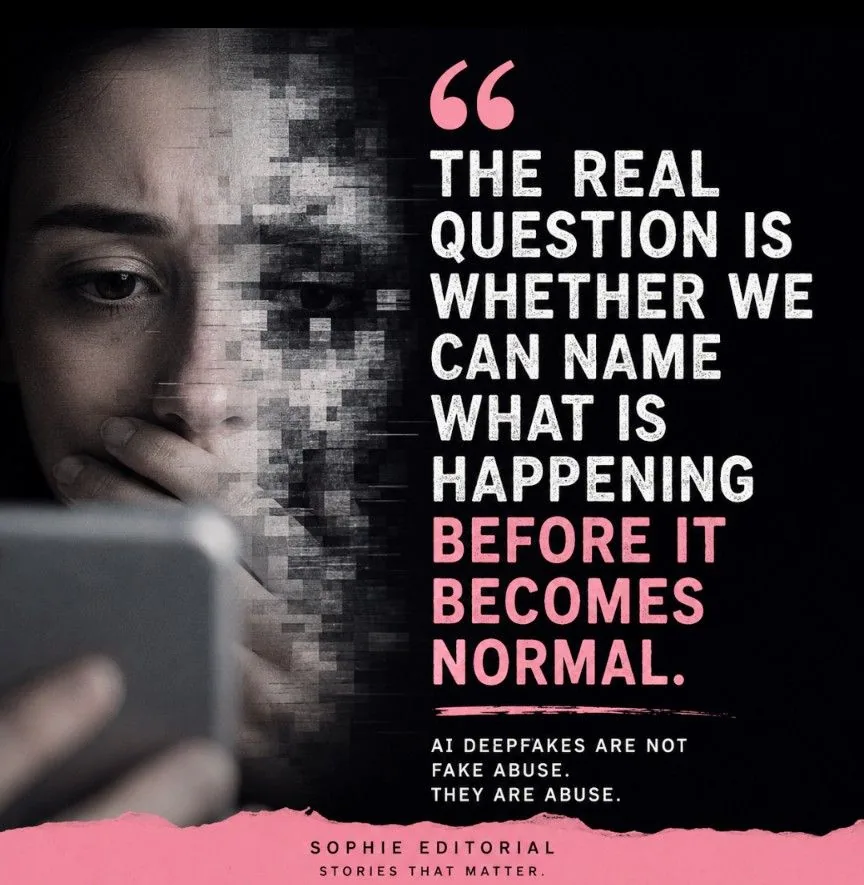
The real question is whether we can name what is happening before it becomes normal. Because history shows technology always moves faster than ethics, safeguarding, and legislation. And right now, millions of people are carrying phones capable of generating sexual abuse imagery in minutes.
We have spent years debating whether the internet makes us crueller.
We already know the answer.
The only question left is what we are going to do about it.