Has the UK and Ireland Lost Their Identity? A Reflection on Culture, Immigration, and Fairness
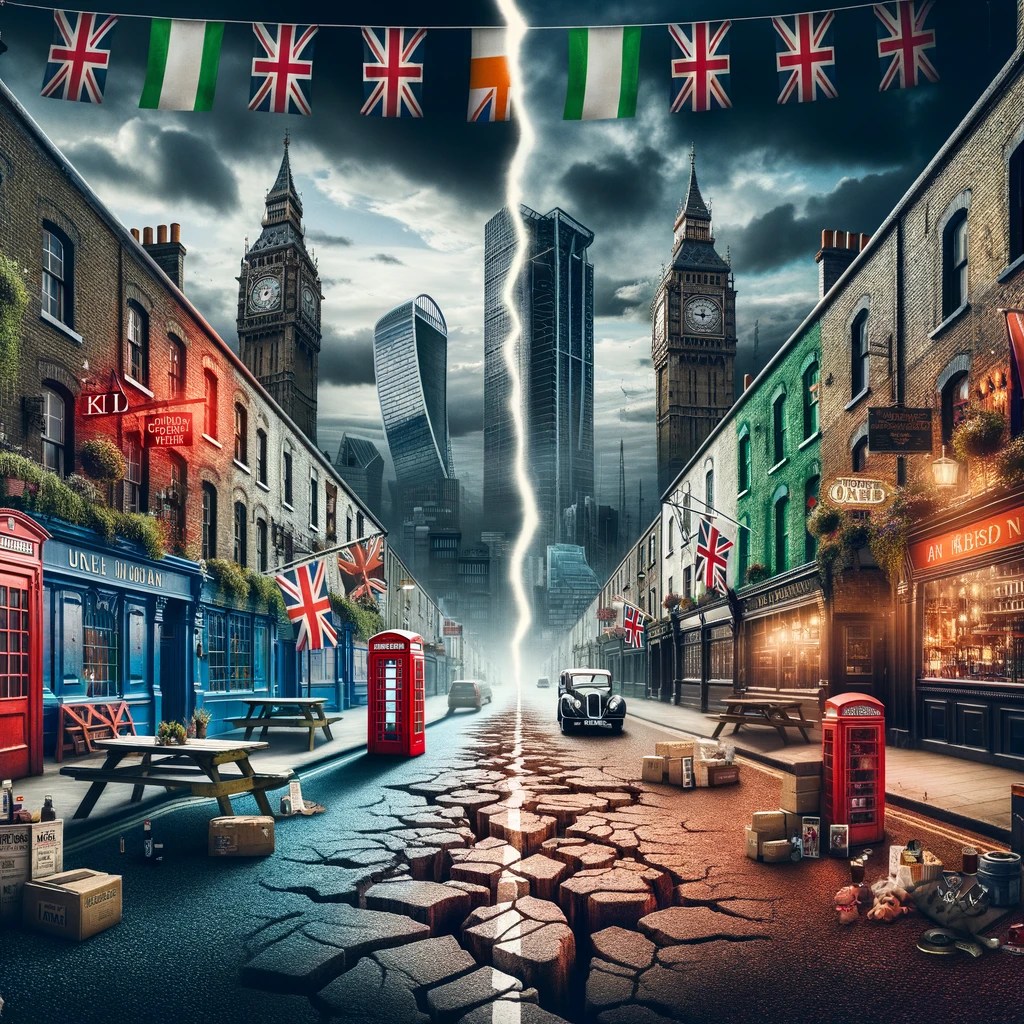
I’ve always believed in diversity. Growing up, I saw it as a strength—something that enriches a country, brings in new perspectives, and makes life more interesting. I never questioned it. If anything, I fully supported the idea that people from all over the world should be free to travel, settle, and build a better life wherever they choose.
But after a recent trip to Coventry, something shifted in me. Not in an aggressive, reactionary way, but in a quiet, unsettling realisation: The UK no longer feels like the UK.
And it’s not just England. Wales, Scotland, Northern Ireland, and even the Republic of Ireland are seeing the same rapid changes. We expect diversity in big cities, but now, even smaller towns and rural areas are transforming so quickly that the culture and identity of these places are barely recognisable.
I live in Wales, but I have English heritage, and I’ve spent time in different parts of the country. I know that cities evolve, that populations change, and that no place stays exactly the same forever. But what I experienced this weekend wasn’t just change—it was complete transformation.
As I walked through the streets, I felt a sense of disconnection. The culture, the atmosphere, even the way people interacted—it didn’t feel British anymore. I wasn’t expecting old-fashioned traditions everywhere, but I also wasn’t expecting to feel like a visitor in my own country. There was no balance. No blend of cultures. Just one dominant shift that had erased what was once there.
And then came the deeper feeling—something beneath the surface. An undertone. I couldn’t put my finger on it, but I felt uneasy. Not because of diversity itself, but because the energy of the place felt… off. Gangs? Crime? A lack of community cohesion? Whatever it was, my instincts kicked in, and I didn’t feel safe.
When Does Immigration Stop Being Beneficial?
This isn’t about race. It’s not about saying “keep people out.” It’s about asking: How much change is too much?
We’ve been told for years that immigration is good, that it strengthens economies and makes societies better. And to some extent, that can be true. But there’s a crucial difference between controlled, sustainable immigration and mass, unmanaged migration that completely transforms a country within a generation.
The UK and Ireland have flung open their doors with no clear plan. And it’s not just the big cities anymore—rural areas in Wales, small towns in Scotland, and communities across Northern and Southern Ireland are feeling the shift. Thousands enter every day, many with no intention of integrating, no understanding of British or Irish values, and in some cases, no real checks on their background. This isn’t diversity—it’s replacement. When an area becomes completely unrecognisable from the culture it was built on, that’s not immigration. That’s erasure.
And yet, while the doors are wide open for people coming in, those of us who want to leave face an entirely different reality. Try getting residency in another country without thousands in savings. Try moving to Spain without a golden visa. Try starting fresh in Canada or Australia without jumping through impossible bureaucratic hoops.
If migration is a human right, why is it a one-way street?
A Nation That No Longer Prioritises Its Own People
It’s not just about culture—it’s about fairness. Services are collapsing, housing is unaffordable, and jobs are scarce. Yet the UK, Irish, and devolved governments seem more focused on accommodating newcomers than ensuring stability for their own people.
We’re already seeing pushback. Ireland has erupted into protests over mass migration, and frustration is growing across Britain too. But instead of listening, governments and media dismiss concerns as “racist” or “fear-mongering.” They ignore the fact that many of us aren’t against diversity—we’re against chaos. If immigration had been staged properly, ensuring integration instead of cultural separation, maybe this wouldn’t be an issue. But it wasn’t.
And now, we’re left to “just deal with it.”
Well, I don’t want to just deal with it anymore. My family and I are actively looking at options to leave because this no longer feels like home. And I know I’m not the only one feeling this way.
So I ask you: Has the UK and Ireland lost their identity? Have they changed beyond recognition, or is this just part of natural evolution?
I don’t have all the answers. But what I do know is that a country should feel like home to the people who built it. And when that feeling disappears, what’s left?
Are We Really Imagining This? The Numbers Say Otherwise.
Some might say this is all just perception—that the UK and Ireland haven’t changed that much, and that concerns over immigration are exaggerated.
But the stats paint a different picture:
- The UK’s population is projected to rise by 5 million in the next decade, almost entirely due to immigration.
- Net migration hit a record-breaking 728,000 in 2024, the highest in history.
- Public concern is growing fast—38% of Brits now see immigration as one of the country’s biggest issues, the highest level since 2016.
And across the Irish Sea:
- Ireland saw 149,200 immigrants arrive last year alone, up from 141,600 the year before.
- Nearly 60% of Irish voters now support stricter immigration policies, marking a major shift in public opinion.
These aren’t just random numbers—they show the scale and speed of change we’re witnessing. This isn’t about fear or paranoia; it’s about acknowledging reality.
So I’ll ask again—has this gone too far, too fast? And if so, is it too late to change course?