WHY NOW? THE PSYCHOLOGY OF COMING FORWARD DECADES LATER
Today, Thames Valley Police did something quietly significant.
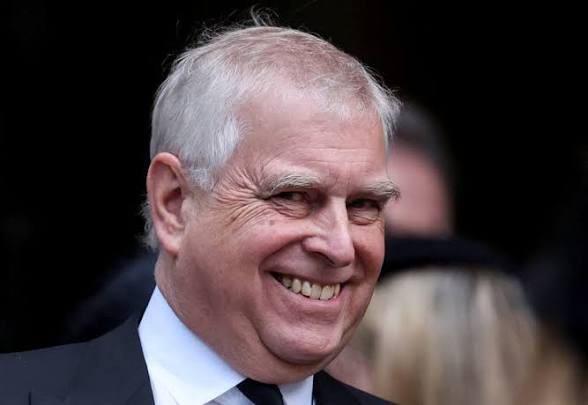
They issued a public appeal for witnesses in the investigation into Andrew Mountbatten-Windsor. And in that statement, they acknowledged a woman who says she was taken to an address in Windsor in 2010 for sexual purposes and told her, publicly, that if she comes forward, it will be handled with care.
They also said it would be led by her wishes. When and if she feels ready.
Sixteen years later.
The coverage today is all about Andrew. The expanding probe. The potential charges. The palace optics.
But I want to talk about her.
And every survivor like her who is watching this unfold and asking themselves the same question the media never bothers to ask.
Why didn’t she say something sooner?
Let me tell you why.
When the person who allegedly harmed you is connected to a royal household, a convicted sex trafficker, and a global network of powerful men, you do not report it.
Not because you are weak.
Because you are rational.
You make a calculation, consciously or not, that goes like this: Who will believe me? What will happen to my life if I say this out loud? Will I be protected or destroyed? And who, exactly, am I supposed to report it to when the institution I would be reporting to is part of the same system that enabled it?
That is not silence born of shame alone. That is a survival response. And it is textbook.
What the psychology actually tells us
Traumatic disclosure is not linear. It does not follow the timeline courts expect, or the one the media demands.
Research on delayed disclosure, particularly in cases involving high-status perpetrators, consistently shows the same barriers. Fear of not being believed. Dependency on the abuser or their network. Internalised shame. The very real knowledge that wealth and power insulate the perpetrator while destroying the person who speaks.
There is also something called betrayal trauma theory. When the harm comes from someone embedded in a system of power and authority, not just a person, but a position, the psychological cost of acknowledging it is compounded. The brain, in its effort to protect itself, files it away. Sometimes for years. Sometimes for decades.
This is not weakness. This is neurobiology.
And it is why “why didn’t she report it sooner” is not just an unhelpful question. It is the wrong question entirely.
So what changes?
The same thing that changed for Virginia Giuffre. For the women who came forward about Harvey Weinstein years after the rooms they were trapped in. For survivors in every major institutional abuse case this country has ever pretended to care about.
Corroboration.
The moment other people speak, the internal calculus shifts. The isolation that silence depends on, the you’re the only one, no one will believe just you, cracks. Documents get released. Names appear in print. And suddenly the risk of speaking feels, for the first time, lower than the cost of staying silent.
Three million pages of Epstein documents dropped earlier this year. A former ambassador was arrested. A man who was once fourth in line to the throne sat in a police station and was questioned.
That is what changes the calculation.
Not courage arriving out of nowhere. The conditions for courage finally existing.
On the language Thames Valley Police used today
I want to give credit where it is due. “Led by her wishes, when and if she feels ready” is the right framing. Trauma-informed. Survivor-centred. It acknowledges agency.
But I also want to be honest about what readiness means inside a broken system.
Readiness does not exist in a vacuum. It is built, or more often, blocked, by everything that surrounds it. The way previous complainants have been treated. The civil settlement that silenced earlier allegations. The years of institutional protection that sent a clear message to anyone watching: this man is untouchable.
You cannot tell a survivor to come forward when they’re ready and then act surprised that it has taken this long. The system spent fifteen years telling her, and every woman like her, that ready was not an option.
This is what institutional abuse actually looks like
It is not just the act. It is the architecture built around the act. The silence that gets constructed. The settlements. The NDAs. The networks. The social permission granted to powerful men that is quietly, methodically removed from the people they harm.
Andrew Mountbatten-Windsor has denied all wrongdoing. He is under investigation, not convicted. That is the legal position and it matters.
But what is not in dispute is the system that surrounded him for decades. The way institutions protect their own. The way survivors are left to carry what powerful men put down.
And what is also not in dispute is this:
She was not ready for sixteen years because the world was not safe for sixteen years.
It is only now, with arrests made, documents public, and police finally, finally asking, that the architecture of silence is beginning to crack.
Coming forward is not something survivors do despite the wait.
It is something they do because of everything the wait taught them about who was finally listening.
© Sophie Lewis | The Indie Leaks | @sophielewiseditorial