“The Infinite Radius of Radicalisation: Rethinking Collateral Damage”
Introduction
In the tumultuous landscape of conflict, discussions often revolve around the immediate physical consequences of bombings, such as destruction, casualties, and wounded individuals. However, a thought-provoking theory emerges from the dialogue of one observer: the concept of an “infinite radius of radicalisation.” While this idea may not be an original theory, its implications are profound and warrant exploration, especially when considering the enduring conflict between Israel and Palestine.
The Tangible and Intangible Metrics
The traditional metrics used in assessing the impact of military actions, such as kill zones, destruction, and zones of physical harm, fail to capture the full extent of the consequences. Beyond these tangible effects, there exists a psychological and social fallout, which this theory encapsulates within the notion of radicalisation.
The Concept of “Radicalisation Radius”
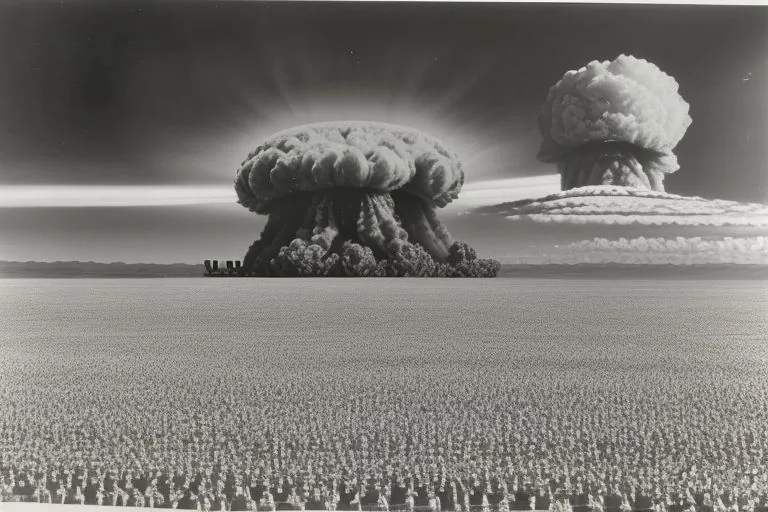
Drawing parallels to the Israel-Palestine conflict, it becomes apparent that the repercussions of bombings reach far beyond the immediate blast site. This new radial area, termed ‘radicalisation,’ sits outside the conventional metrics, affecting everyone within its reach. The intriguing aspect of this theory lies in its mathematical analogy, as it operates within the realm of radius, invoking concepts from geometry and trigonometry.
The Global Transmission of Fallout
The size of the radical fallout is determined by the interconnected factors of accessibility to information, the globalised nature of media, and the immediacy of communication. Years ago, the impact of bombs was somewhat contained locally, and the global management of fallout relied on propaganda, shaping perceptions without direct exposure to the aftermath. However, with the widespread use of body-worn cameras by military personnel, the “social wind” carries the fallout globally, exposing people to the visceral effects of war in real-time.

The Perpetuating Cycle of Radicalisation
This instantaneous transmission of war’s consequences fuels a more widespread and unfiltered understanding of the psychological and ideological aftermath. The vivid imagery and personal narratives captured on camera contribute to the expansion of the radicalisation radius, surpassing the limitations of earlier propagandist control.
Moreover, the cycle of radicalisation perpetuates itself as radicalised individuals become the epicentre of future conflicts. When these individuals are targeted in military actions, the fallout becomes a catalyst for further radicalisation, generating a ripple effect that amplifies the radius. The interconnectedness of events and ideologies creates a self-sustaining loop, intensifying the pervasive impact of radicalisation.
The Mathematical Proof of an Infinite Radius
The mathematical proof of the infinite radius lies in the concept’s ability to permeate not only physical space but also time. A discrete mathematical representation could be:
[ R(t) = \sum_{n=0}^{\infty} r_n \cdot e^{-kt} ]
Here, ( R(t) ) represents the radicalisation radius at time ( t ), ( r_n ) symbolises the influence of each bomb or radical event, and ( e^{-kt} ) accounts for the decay of impact over time. The sum over ( n ) reflects the cumulative effect of all past radicalising events, emphasising the infinite and cumulative nature of the radius.
In essence, the equation illustrates that the consequences of radicalisation persist indefinitely, transcending temporal and spatial boundaries. This mathematical framework mirrors the enduring and far-reaching impact of radicalisation on societies and individuals, urging a reevaluation of our approach to global conflicts and their lasting consequences.
Reading the Silent Wave: Our Existence in the Fallout Radius
Reading this, you may be unaware of this silent wave passing you by unannounced, yet you yourself sit in the fallout radius of every previous war and conflict. This undeniably shapes your surroundings, propagating through time, influencing our current global situation. Even before the World Wars or the fallout from the very first conflicts ever recorded, the effects have permeated through generations.
The Endless Potential for Radicalisation
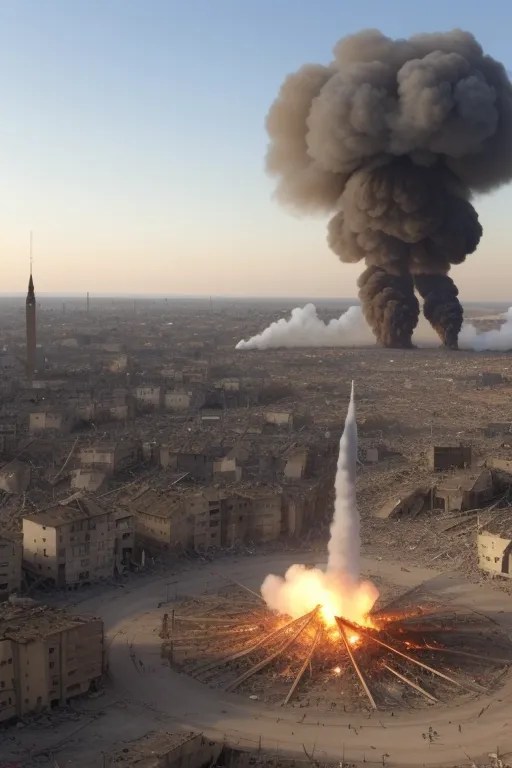
As time passes, the potential for radicalisation is compounded, fulfilling the core principle that radical fallout is infinite. There can never be an end to it. So long as there are acts of aggression, irrespective of the morality of the action, the cycle of radicalisation persists, echoing through time and shaping the course of the present as we all exist within the fallout radius of historical conflicts. In the case of the Hamas-IDF conflict, if the IDF were to complete total genocide, the radicalised fallout would last a potentially infinite amount of time; it’s already spread globally and shows signs of decades to come. For Israel, this could be seen as a means to an end, but it’s an act of revenge that may incite more hate, aggression, and diminish chances of peace for decades to come. For Palestine, this is the end of life as they know it; Gaza is completely leveled, and the homes, businesses, places of worship, and culture are gone, or more accurately, they are reset. Now, their complete being will be built from exile and mass murder of innocent people. This is a hate that does not go away.

Acknowledgement
The theory of the “infinite radius of radicalisation” discussed in this article emerged from conversations with an insightful acquaintance. Their unique perspective prompted a deeper exploration of the far-reaching consequences of conflict, shaping the narrative presented here. This acknowledgment serves as a reminder that valuable ideas can stem from diverse discussions and individual insights.
Conclusion
In conclusion, the theory of an infinite radius of radicalisation prompts us to reconsider our understanding of collateral damage. By acknowledging the far-reaching psychological and ideological effects of military actions, we can strive for a more comprehensive assessment of the true cost of conflict. As we delve into the intricacies of this concept, we gain insights that could reshape our approach to global conflicts and perhaps contribute to breaking the cycle of violence.