NEURODIVERSITY & ADDICTION: THE REGULATION NOBODY TALKS ABOUT
©️ Sophie Lewis|Shadowborn
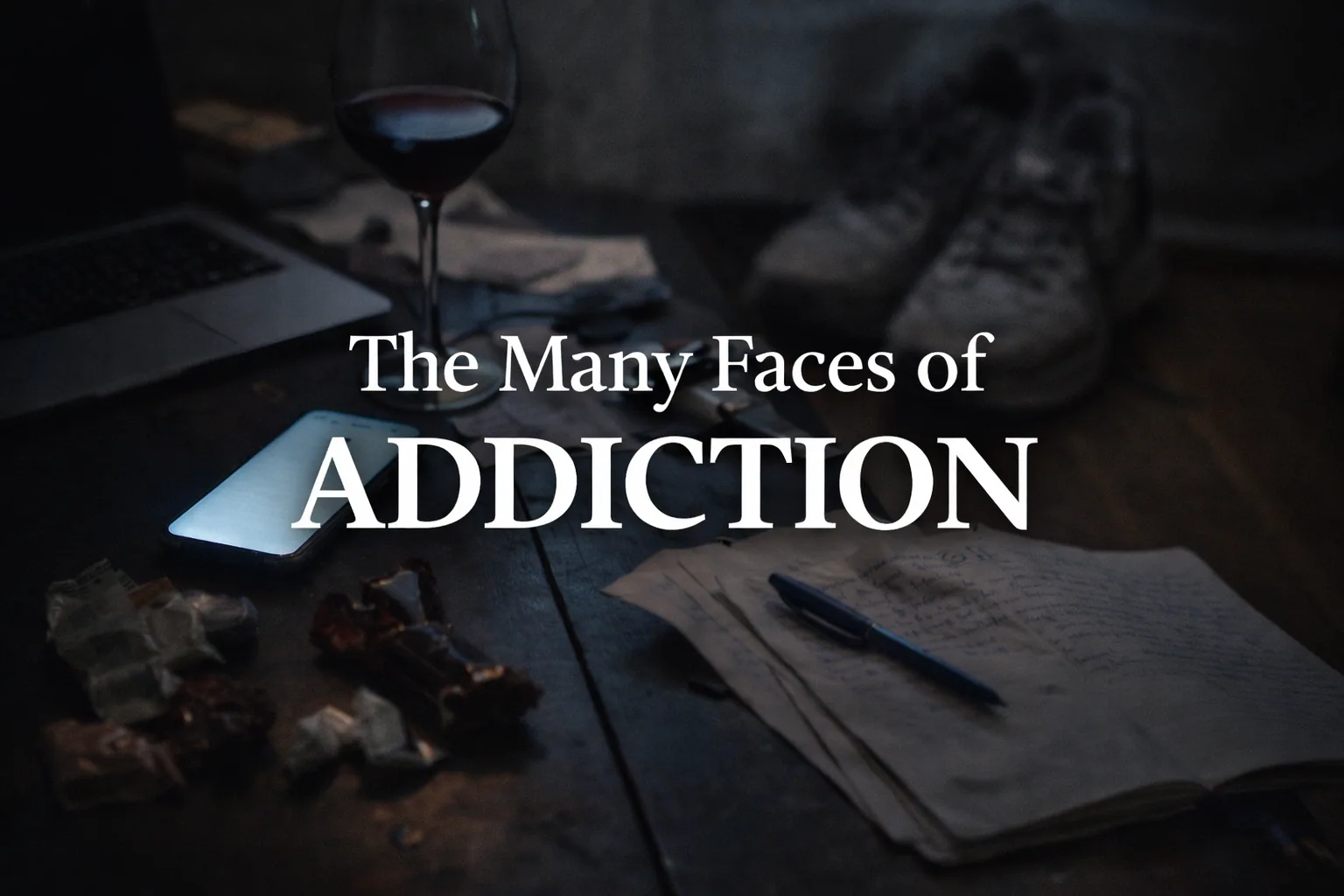
Part 2 – The Many Faces of Addiction
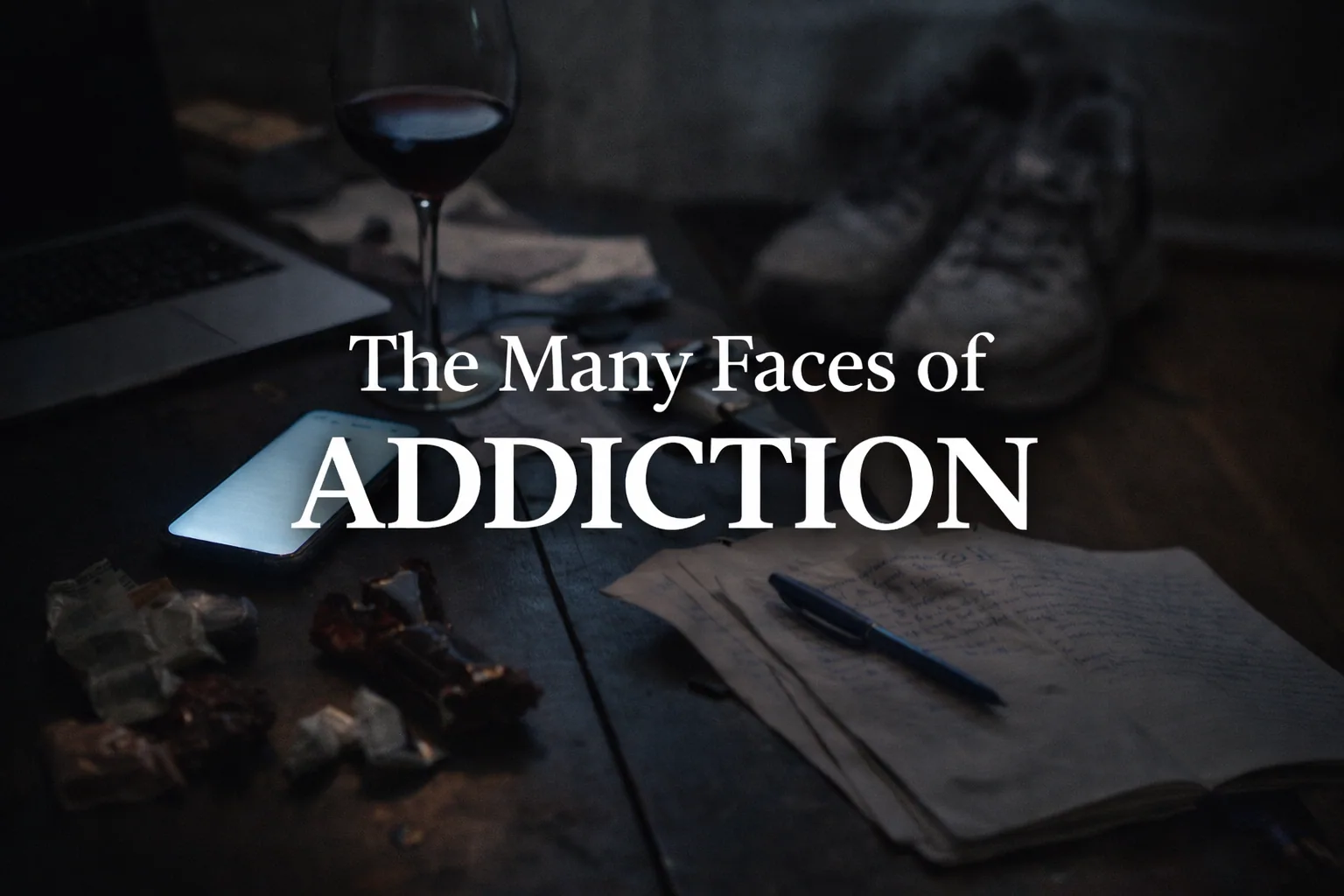
You don’t have to be drinking at 9am to have a problem. You just have to need something outside yourself to feel okay inside yourself.
We built a very specific picture of what addiction looks like.
It looks like a certain kind of person, in a certain kind of situation, making a certain kind of choice that you would never make. It looks like rock bottom. It looks like obvious. It looks like other people.
That picture has kept an enormous number of people from ever recognising themselves in the conversation. Which means it’s kept an enormous number of people from understanding what’s actually happening inside them.
So let’s widen the frame. Considerably.
Addiction, at its most fundamental level, isn’t about the substance or the behaviour. It’s about the function it serves. What it does to the nervous system, the relief it provides, the gap it closes, the feeling it creates or the feeling it makes stop.
That function can be served by almost anything.
Alcohol. Cocaine. Sugar. Pornography. Shopping. Scrolling. Work. Exercise. Drama. Crisis. Relationships. Chaos. Certainty. Approval. Rage.
The vehicle changes. The mechanism doesn’t.
What we’re really talking about, every time, underneath everything, is a nervous system that has found something that regulates it, and has learned to need that thing in order to feel okay. The brain doesn’t particularly care whether that thing is socially acceptable. It cares whether it works.
Let’s start with the one nobody takes seriously.
Sugar triggers dopamine release. It creates tolerance over time, you need more to get the same effect. It produces withdrawal symptoms when removed. It is used, consciously or not, as a direct response to stress, emotional pain, boredom, and low mood. For a neurodivergent brain already operating under chronic dopamine deficit, that daily pull toward sweetness, the particular, compulsive, not-quite-voluntary quality of it, is not greed. It’s not weakness. It’s a brain doing triage with whatever’s available.
Scrolling works the same way. The intermittent reward structure of a social media feed is not accidental, it’s engineered to exploit the same dopamine pathways that make gambling so effective. Variable rewards at unpredictable intervals. Just enough, just often enough, to keep the reach happening. For a brain already primed to seek stimulation, that feed is not entertainment. It’s medication. Crude and relentless and impossible to put down because putting it down means returning to the gap.
These are the acceptable ones. The ones we laugh about. The ones that don’t count.
They count.
Then there’s approval.
This one runs deeper than most people are willing to look, because it’s so thoroughly woven into how we’re taught to function. Seek validation. Perform adequately. Adjust yourself until people are comfortable. We call this socialisation. We reward it.
But for a neurodivergent person who grew up being told they were too much, too loud, too intense, too difficult, approval doesn’t feel like a nice-to-have. It feels like proof of survival. The hit of someone’s positive response, someone’s acceptance, someone’s pleasure at your existence, that’s neurological. It releases the same reward chemicals as other substances we take far more seriously. And just like those substances, it creates dependency. You calibrate yourself around other people’s reactions. You lose the ability to feel okay without external confirmation that you are okay. You become, without meaning to, addicted to being witnessed in a particular way.
The withdrawal from that looks like anxiety when someone doesn’t reply quickly enough. Like obsessive replaying of conversations to check you said the right thing. Like the particular devastation of mild criticism that seems disproportionate to everyone watching but feels, to you, like the floor has gone.
It’s not sensitivity. It’s a nervous system that learned to regulate through other people’s approval, and now can’t find its baseline without it.
Chaos deserves its own examination, because it’s the one most likely to make people defensive.
Nobody wants to believe they’re addicted to chaos. It sounds like an accusation. Like being called dramatic, or self-destructive, or someone who simply can’t be trusted to have nice things.
But here’s what chaos actually does to certain nervous systems.
It creates urgency. Urgency creates focus. Focus creates the neurological conditions that the ADHD brain spends its entire existence trying to manufacture. A genuine crisis, or an unconsciously engineered one, does what nothing else seems to. It makes the brain come online. Fully. Immediately. Without effort.
So the person who always seems surrounded by drama, who self-sabotages reliably just as things settle, who picks fights when peace should be possible, they are not broken. They are not simply difficult. They have found, through years of trial and error, that stability feels like sensory deprivation and chaos feels like finally being able to breathe.
The self-sabotage isn’t random. It’s precise. It happens at exactly the point where things become calm enough that the brain loses its regulating charge, and something in the nervous system, below the level of conscious decision, moves to restore it. Not because the person wants destruction. Because they genuinely cannot feel alive without intensity.
Understanding that doesn’t make the destruction acceptable. But it makes it legible. And you cannot interrupt a pattern you’ve never been able to read.
Certainty addiction is the one that catches the intelligent ones.
The people who intellectualise as regulation. Who research compulsively. Who need to have the answer, the plan, the framework, the explanation, not because they’re particularly curious, but because ambiguity feels physiologically dangerous. Uncertainty produces the same stress response in certain nervous systems as actual threat. So the brain learns to eliminate it. Constantly. Exhaustingly.
This looks like wisdom from the outside. It looks like thoroughness, preparation, due diligence. It is also, underneath, a nervous system that cannot tolerate not knowing, and has built an entire identity around never having to.
The cost is significant. Relationships suffer when a partner cannot be held in uncertainty. Creativity suffers when an idea has to be fully formed before it’s allowed to exist. Life suffers when every unknown becomes an emergency to be solved rather than a space to be inhabited.
And then there’s work.
Productivity addiction is the one we actively celebrate, which makes it the hardest to name. We promote the people who cannot stop. We mistake compulsion for ambition and call it admirable. We build entire cultures around the mythology of the person who grinds hardest.
But the person who cannot rest, who uses busyness as a wall between themselves and their own interior, who experiences genuine panic when things slow down, who defines their worth entirely by output, is not more disciplined than everyone else. They are regulating. The work is doing what the wine does for someone else. The full inbox is doing what the chaos does. The productivity is the substance.
And like every other substance, it eventually stops working. Burnout isn’t a productivity failure. It’s withdrawal.
None of this is about equivalence. A scrolling habit and a heroin dependency are not the same in terms of consequence or severity. That’s not the point.
The point is that they live on the same spectrum of human behaviour. That they emerge from the same underlying need. That dismissing the milder end as normal or fine or just how people are, while pathologising the severe end as moral failure, means we never understand what’s actually happening in either case.
It means the person addicted to approval never gets to examine why external validation feels like oxygen. The person addicted to certainty never gets to ask why ambiguity feels like annihilation. The person who cannot stop working never gets to find out what they’re working so hard not to feel.
And the person who eventually moves from the socially acceptable version to the socially unacceptable one, from wine with dinner to a bottle alone, from the gym to something less forgiving, gets to be surprised. Gets to feel like they crossed a line nobody warned them about.
The line was always there. We just agreed not to look at it.
The question worth sitting with isn’t whether you’re addicted to something.
Almost certainly, you are. Most people are. That’s not a condemnation, it’s an honest accounting of what happens when nervous systems don’t get what they need and are left to find it on their own.
The question is what your something is doing for you. What gap it’s closing. What it’s making bearable that would otherwise be unbearable. What it’s giving your nervous system that it hasn’t found anywhere else.
That question isn’t an accusation.
It’s a map.
And maps are how you find your way somewhere different.
Part 3: Shame & The Addictive Identity, coming next.