NEURODIVERSITY & ADDICTION: THE REGULATION NOBODY TALKS ABOUT
©️ Sophie Lewis|Shadowborn
Part 1 — ADHD & Dopamine: The Baseline
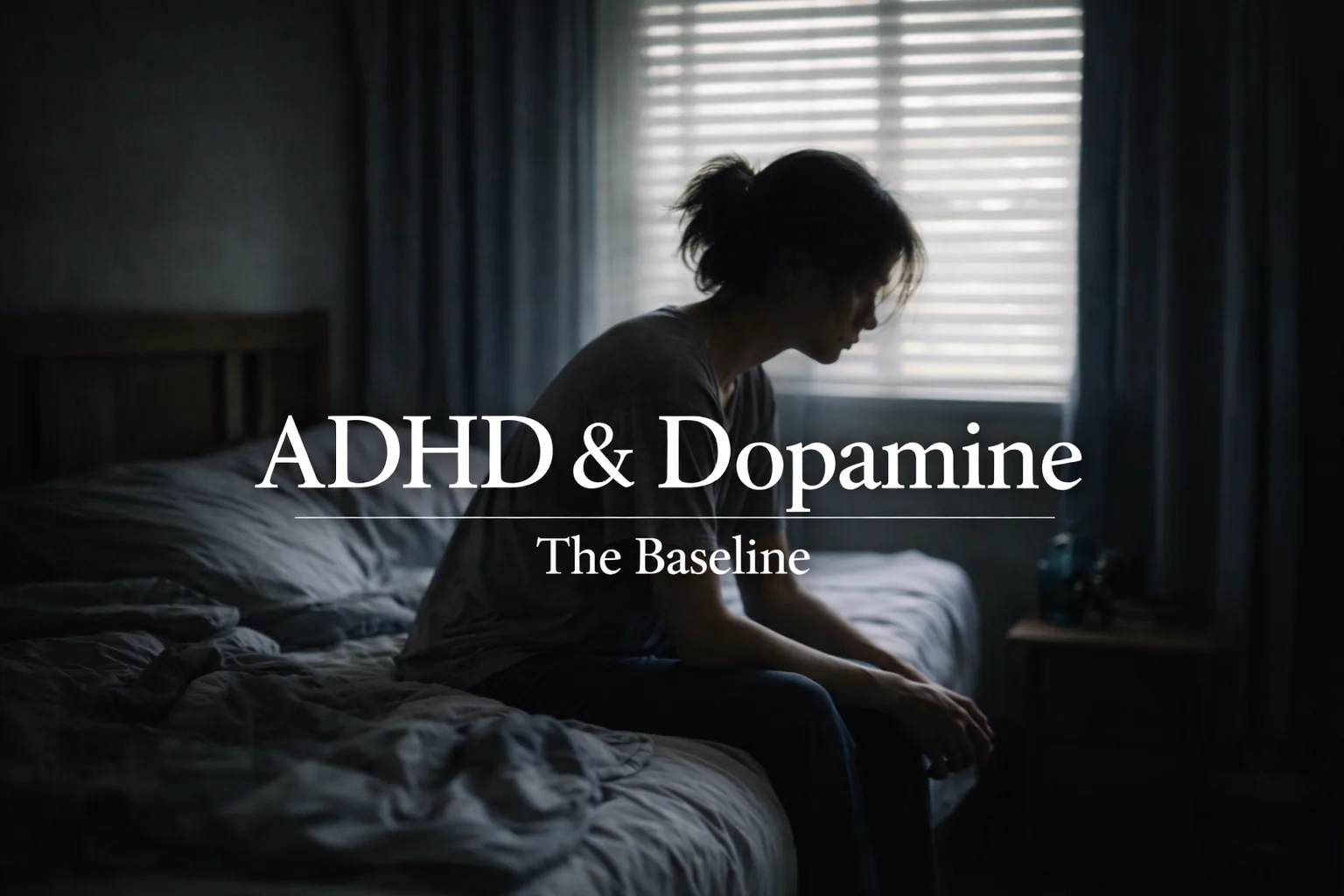
An understimulated brain will find relief before it finds permission.
Nobody teaches you that boredom can feel like drowning.
Not the mild, restless kind that most people describe, the vague wish for something to do on a slow Sunday. I mean the kind that sits in your chest like a stone. The kind that makes your skin feel wrong. That turns a quiet room into something that needs to be escaped immediately, by any means available.
For some brains, the absence of stimulation isn’t uncomfortable. It’s unbearable.
And that distinction matters more than most people realise.
The ADHD brain has a dopamine problem, but not the one most people assume.
It’s not that the brain produces too little dopamine exactly. It’s that the reward circuitry doesn’t regulate in the same way. The baseline is lower. Flatter. What a neurotypical brain gets from an ordinary Tuesday, a background hum of okayness, of motivation, of being able to simply get on with things, the ADHD brain has to work significantly harder to achieve. Sometimes it can’t achieve it at all through conventional means.
Think about what that actually means to live inside.
Every day begins with a deficit. Not a metaphorical one, a genuine neurochemical gap between how the brain feels and how it needs to feel in order to function. Tasks that require initiation feel impossible not because the person is lazy but because the dopamine required to make starting feel possible simply isn’t there. Emotions feel bigger because the regulatory system that buffers them is unreliable. Time feels strange, either compressed into hyperfocus or stretched into an unnavigable nothing, because dopamine is deeply involved in how the brain tracks it.
And underneath all of it, this constant, low-level static. A restlessness that has no clean object. A hunger that doesn’t know its own name.
The brain, being the extraordinary survival machine that it is, will always move to close that gap.
It doesn’t wait to be given permission. It doesn’t weigh up long-term consequences against short-term relief. It finds what works and it reaches for it, again, and again, and again, because that is precisely what brains do when they’re trying to survive their own chemistry.
The reaching isn’t a character flaw. It isn’t weakness or excess or poor impulse control in the moral sense. It is a nervous system doing exactly what nervous systems are designed to do: seek regulation by whatever means are available.
The problem has never been the reaching. The problem is that nobody told these people what they were reaching for, or why.
Instead, we built a story about who they were.
The child who needed constant stimulation became the adult who couldn’t moderate. The kid who was always in trouble became the person who couldn’t seem to make good decisions. The teenager who self-medicated became the cautionary tale. Everywhere along that line, the behaviour got named and judged. The neurology underneath it never did.
Nobody connected the dots. Nobody said: this person’s brain is operating under chronic deficit conditions, and every behaviour you’re judging them for is an attempt to compensate for something they were never taught to name.
What looks like chaos from the outside is often, from the inside, an improvised survival system. Built without instructions. Running on instinct. Doing its imperfect, costly, sometimes devastating best.
This series is about what happens when that survival system goes unrecognised for long enough.
It’s about the relationship between neurodivergent nervous systems and the very human, very logical, very misunderstood ways they find regulation when conventional options fail them. It’s about addiction in the broad, honest sense, not just substances, but anything a nervous system learns to need in order to feel okay.
And it’s about what becomes possible when we stop framing that need as a moral failure and start understanding it as information.
Because you cannot work with something you’ve spent your whole life being told to be ashamed of.
The understimulated brain will always find relief.
The question has never been whether it will. The question is whether we ever give it better options, and whether we’re willing to understand it clearly enough, and honestly enough, to do that without contempt.
Part 2: The Many Faces of Addiction, coming next.