The Eyes Were Taken First
©️ Sophie Lewis|Shadowborn
The Murder of Kelly Anne Bates: When Grooming Becomes Captivity
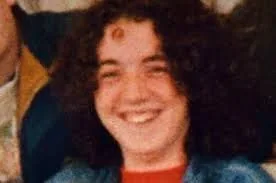
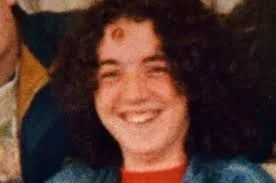
Kelly Anne Bates was 17 years old.
Athletic. Bright. Dreaming of becoming a teacher.
She loved playing sports. She worked at a graphics firm whilst attending college.
She had plans. She had ambitions. She had a future.
Then she met James Patterson Smith.
And everything changed.
On 16 April 1996, Smith walked into Gorton Police Station in Manchester and told officers his teenage girlfriend had accidentally drowned in the bathtub.
He said he’d tried to resuscitate her.
He said it was an accident.
When police arrived at his house, they found Kelly’s body.
Naked. Lifeless. On the bathroom floor.
Blood everywhere.
And injuries so extensive that the Home Office pathologist, after examining almost 600 homicide victims in his career, said:
“I have never come across injuries so extensive.”
Kelly Anne Bates had been systematically tortured for four weeks.
Her eyes had been gouged out whilst she was still alive.
Not less than five days before her death.
Not more than three weeks.
She had been partially scalped.
Her kneecaps had been smashed so she couldn’t walk.
She had over 150 separate wounds on her body.
And the man who did it to her had been grooming her since she was 14 years old.
Who Was James Patterson Smith?
James Patterson Smith was 48 years old when he met Kelly.
Unemployed. Divorced.
Described by acquaintances as “house-proud” and “well-groomed.”
A teetotaller and non-smoker.
On the surface, he seemed respectable.
But beneath that facade was a serial abuser of women with a 20-year pattern of escalating violence.
His First Marriage (1970–1980)
Ended after ten years because Smith had been violent towards his wife.
Tina Watson (1980–1982)
Smith’s next relationship was with 20-year-old Tina Watson.
He “used her as a punch-bag” for two years.
He beat her whilst she was pregnant with their child.
Tina later said:
“At first it was now and again, just a little tap. But in the end it was every day. He would smack me in the face or hit me over the head with an ashtray. He would kick me in the legs or between the legs.”
Smith also attempted to drown Tina whilst she was bathing.
She managed to escape.
Wendy Mottershead (1982+)
After Tina escaped, Smith started seeing 15-year-old Wendy Mottershead.
He abused her too.
Attempted to drown her in a kitchen sink.
By the time he met Kelly Anne Bates in 1993, Smith had established a clear pattern:
- Target young, vulnerable women
- Isolate them
- Escalate violence gradually
- Attempt drowning as ultimate control
Kelly would be the one he finally killed.
How They Met
Kelly was 14 years old in 1993.
She was babysitting for one of Smith’s friends.
After the job finished, Smith offered to walk her home “to keep her safe.”
The perfect gentleman.
The grooming had begun.
Smith’s process was methodical and secretive.
He cultivated the relationship slowly, ensuring Kelly’s parents didn’t know about him.
For two years, Kelly’s parents had no idea their daughter was involved with a man in his 40s.
They’d spoken to him on the phone.
But they hadn’t met him.
They had no idea how old he was.
Meeting the Parents
When Kelly was 16, she finally introduced Smith to her parents, Margaret and Tommy Bates.
She told them he was her “older boyfriend.”
Margaret Bates recalls the moment she first saw him:
“When I first met him, the hairs on the back of my neck went up. This wasn’t the man I wanted for my daughter. I vividly recall seeing our bread knife in the kitchen and wanting to pick it up and stab him in the back.”
Margaret would later say she regretted not acting on that instinct.
Because Smith wasn’t just “older.”
Kelly had told her parents Smith was 32.
He was actually 48 years old.
A 30-year age gap.
And he’d coached Kelly to lie about it.
The Transformation
Before she met Smith, Kelly was:
- Athletic
- Outgoing
- Ambitious
- Strong
After she moved in with him, she became:
- Withdrawn
- Silent
- Unwashed
- Broken
She stopped showering.
She would spend hours curled up on the sofa in complete silence.
One day, she came home with one side of her face black from bruising.
She told her mother some girls had attacked her.
Margaret knew it was a lie.
But she also knew that if she tried to drag Kelly away from Smith, she might lose her daughter completely.
So she waited.
And hoped Kelly would leave on her own.
The Final Departure
30 November 1995.
Kelly told her parents she had a new job and wouldn’t be able to see them as much.
She moved into Smith’s two-bedroom semi-detached house at Furnival Road, Gorton.
Margaret and Tommy never saw their daughter alive again.
The Isolation
Once Kelly moved in, Smith systematically cut her off from everyone who cared about her.
The Phone Calls
At first, Kelly still called home.
But the calls became sporadic.
Then rare.
Then stopped.
The Cards
In March 1996, Margaret and Tommy received birthday and anniversary cards.
Supposedly from Kelly.
But they were written in Smith’s handwriting.
Not Kelly’s.
The Brother’s Visit
Kelly’s brother tried to visit her at the house.
Smith told him she wasn’t home.
The Neighbour
A concerned neighbour asked after Kelly.
Smith briefly showed her at an upstairs window.
Just long enough to prove she was “alive.”
Then she disappeared again.
The Family’s Attempts
Margaret and Tommy contacted their doctor.
They contacted the police.
But Kelly was legally considered able to make her own decisions.
And without evidence of a crime, no one could intervene.
Margaret and Tommy were terrified that if they pushed too hard, they’d drive Kelly further into Smith’s control.
So they waited.
And whilst they waited, their daughter was being tortured to death.
The Four Weeks of Hell
What happened to Kelly Anne Bates in the final month of her life is almost incomprehensible.
The pathologist who examined her body said the injuries were the worst he’d ever seen in almost 600 homicide cases.
The prosecutor at trial said:
“It was as if he deliberately disfigured her, causing her the utmost pain, distress and degradation. The injuries were not the result of one sudden eruption of violence; they must have been caused over a long period and were so extensive and so terrible that the defendant must have deliberately and systematically tortured the girl.”
The Injuries
Kelly had over 150 separate wounds on her body:
Burns:
- Cigarette burns covering her body
- Burnt with a hot iron on her buttocks and legs
- Scalding burns from hot baths
Stabbings:
- Stabbed repeatedly across her body
- Stabbed inside her mouth
Mutilation:
- Partially scalped (skin torn from her head)
- Both eyes gouged out (not less than 5 days, not more than 3 weeks before death)
Breaking:
- Kneecaps smashed (so she couldn’t walk or escape)
- Multiple broken bones
Starvation:
- Lost approximately 20kg in weight
- Denied food for extended periods
Dehydration:
- Denied water for several days before her death
Restraint:
- Tied to a radiator by her hair
- Kept captive in the house
Final assault:
- Beaten about the head with a shower head
- Drowned in the bathtub
The Eyes
The pathologist determined Kelly’s eyes had been removed “not less than five days and not more than three weeks before her death.”
Think about that.
Kelly lived for up to three weeks after Smith gouged out her eyes.
Blind.
In agony.
Unable to escape because her kneecaps were smashed.
Tied to a radiator.
Starving.
Alone with her torturer.
For three weeks.
16 April 1996
On the morning of 16 April, Smith walked into Gorton Police Station.
He told officers his girlfriend had “accidentally drowned” in the bathtub.
He said they’d had an argument whilst she was bathing.
He said she’d inhaled water.
He said he’d tried to resuscitate her but failed.
He also claimed she often pretended to be unconscious.
The police were initially puzzled by his story.
But they went to the house.
The Discovery
When officers arrived at Smith’s home, they found Kelly’s body on the bathroom floor.
Naked.
Lifeless.
And covered in blood.
The scene made it immediately clear this was not an accidental drowning.
Kelly’s body told the story of weeks of systematic torture.
Smith was arrested on the spot.
The Trial
Smith was charged with murder.
At trial, he maintained his innocence and blamed Kelly for everything.
Smith’s Defence
He claimed:
- Kelly “would put me through hell, winding me up”
- She “taunted him about his dead mother”
- She had “a bad habit of hurting herself to make it look worse on me”
- She had asked him to hurt her and he was just complying with her wishes
When asked why he had inflicted so much torture on a teenager, he literally said:
She challenged him to hurt her.
He was just doing what she wanted.
The jury didn’t believe a word of it.
The Evidence
The prosecution presented:
- Autopsy evidence showing 150+ separate injuries
- Evidence of systematic torture over weeks
- Testimony from Smith’s previous partners about his pattern of abuse
- Medical evidence showing Kelly had been starved, dehydrated, and tortured
The photographs of Kelly’s injuries were so disturbing that every member of the jury was offered professional counselling.
This was the first time in British legal history that an entire jury was offered counselling.
All of them accepted.
The Verdict
The jury of seven men and five women took one hour to find James Patterson Smith guilty of murder.
One hour.
The judge, Mr Justice Sachs, sentenced Smith to life imprisonment with a minimum term of 20 years.
He said:
“This has been a terrible case, a catalogue of depravity by one human being upon another. You are a highly dangerous person. You are an abuser of women and I intend, so far as it is in my power, that you will abuse no more.”
Smith’s First Parole Hearing
In 2023, Smith had his first parole hearing.
He was denied release.
He remains in prison.
What This Case Reveals
1. Grooming Doesn’t Stop at Childhood
Smith began grooming Kelly when she was 14.
By the time she was 16 and legally able to make her own decisions, she was already emotionally controlled by him.
The grooming process had done its job:
- She trusted him
- She lied for him (about his age)
- She defended him
- She isolated herself from her family
By the time she moved in with him, she was already trapped.
2. Isolation is a Weapon
Smith didn’t just physically imprison Kelly.
He systematically isolated her from everyone who could help:
- Stopped her seeing family
- Stopped her calling home
- Controlled all communication
- Kept her hidden from neighbours
When her family tried to intervene, they were told she was legally considered able to decide for herself and nothing could be done.
By the time there was evidence, Kelly was dead.
The system designed to protect young adults’ autonomy also prevented intervention in cases of abuse.
Kelly’s parents knew something was wrong.
They tried to get help.
But because Kelly was considered old enough to decide for herself, no one could force a welfare check.
No one could make her leave.
No one could save her.
3. Domestic Abusers Escalate
Smith’s pattern was clear:
First marriage: Physical violence
Tina Watson: Daily beatings, attempted drowning whilst bathing
Wendy Mottershead (15): Abuse, attempted drowning in sink
Kelly Anne Bates: Systematic torture, eyes gouged out, murdered by drowning
Each relationship, the violence got worse.
Each time, he targeted younger, more vulnerable women.
Each time, he used the same method (drowning) as the ultimate act of control.
Kelly was the culmination of decades of escalating abuse.
4. Serial Abusers Rarely Stop
Smith had a 20-year history of abusing women before he killed Kelly.
Multiple women.
Multiple attempts at drowning.
Multiple escapes.
And yet, he was never stopped.
Not by the legal system.
Not by his community.
Not until he murdered a 17-year-old girl.
5. The Legal Adult Loophole
When Kelly’s parents contacted the police and her doctor, they were told:
Kelly was legally considered able to make her own decisions.
Without evidence of a crime, no one could intervene.
But by the time there was evidence, Kelly was dead.
The system designed to protect young adults’ autonomy also prevented intervention in cases of abuse.
Kelly’s parents knew something was wrong.
They tried to get help.
But because Kelly was considered old enough to decide for herself, no one could force a welfare check.
No one could make her leave.
No one could save her.
Margaret Bates’ Regret
Kelly’s mother, Margaret, has lived with devastating guilt.
She knew Smith was dangerous from the moment she met him.
She wanted to stab him with the bread knife.
But she didn’t.
She was afraid that if she forced Kelly to choose, Kelly would choose Smith.
And she’d lose her daughter completely.
Margaret said:
“I couldn’t bear the worry, but I knew if I dragged her away from him, I could lose her.”
So she waited.
And hoped Kelly would leave on her own.
But Kelly never got the chance.
After the trial, Margaret said:
“I lost the best thing that ever happened to me.”
No sentence will ever feel like justice.
Because her daughter is gone.
The Pattern Smith Followed
James Patterson Smith’s abuse of Kelly followed a textbook pattern of domestic violence escalation:
Stage 1: Selection
Target a young, vulnerable person (Kelly was 14, groomed whilst babysitting)
Stage 2: Grooming
Build trust slowly (“walk her home to keep her safe”)
Create secrecy (parents didn’t meet him for 2 years)
Lie about red flags (age difference)
Stage 3: Isolation
Move victim into abuser’s space (Kelly moved in at 16)
Cut off family contact (sporadic calls, forged cards)
Control all communication (Smith answered phone, wrote cards)
Stage 4: Degradation
Begin with small acts of control (stop showering, silence)
Escalate to visible injuries (bruised face)
Gaslight about abuse (“girls attacked her”)
Stage 5: Captivity
Physical imprisonment (smashed kneecaps, tied to radiator)
Complete control (starvation, dehydration, torture)
Remove hope of escape (eyes gouged out, can’t walk)
Stage 6: Murder
Ultimate act of control (drowning in bathtub)
Blame the victim (“she asked for it”)
Claim accident (“tried to resuscitate her”)
Why Didn’t Kelly Leave?
People always ask this question.
Why didn’t she just leave?
Here’s why:
At 14–16: She was being groomed. She thought he loved her.
At 16–17: She was already isolated. Her family felt distant. Smith was her world.
Final month: She couldn’t leave. Her kneecaps were smashed. She was tied to a radiator. She was blind.
Kelly didn’t stay because she wanted to.
She stayed because Smith made it impossible for her to leave.
What Kelly Deserved
Kelly Anne Bates deserved to:
- Finish college
- Become a teacher
- Play sports
- Live her life
- Be loved, not tortured
She deserved a system that recognised grooming of a 14-year-old as abuse.
She deserved intervention when her family raised concerns.
She deserved protection when she became isolated.
She deserved to live.
She got none of that.
The Documentary
Kelly’s case was featured in a documentary:
Britain’s Darkest Taboos, Series 4, Episode 2: “Our Daughter Was Tortured To Death By Her Sadistic Boyfriend”
Her parents spoke publicly about what happened.
About the guilt they carry.
About the daughter they lost.
About the monster who took her.
Final Thoughts
James Patterson Smith tortured Kelly Anne Bates for four weeks.
He gouged out her eyes whilst she was still alive.
He partially scalped her.
He smashed her kneecaps so she couldn’t escape.
He starved her.
He denied her water.
He tied her to a radiator.
And then he drowned her in a bathtub.
And when the police came, he said:
“It was an accident.”
“She asked for it.”
“She hurt herself to make me look bad.”
The jury didn’t believe him.
But the damage was already done.
Kelly was dead.
And a serial abuser had finally killed one of his victims.
👁️💀
Kelly Anne Bates
18 May 1978 – 16 April 1996
She was 17 years old.
She wanted to be a teacher.
She never got the chance.
May her name be a warning.
And may we never ignore the signs again.
🕯️
If someone you know is being isolated by a partner, that is abuse.
If someone you know has unexplained injuries, that is abuse.
If someone you know has stopped seeing family and friends, that might be abuse.
Don’t wait for proof.
Don’t wait for permission.
Intervene.
Because Kelly’s family tried.
And they were told they couldn’t.
And their daughter died.
💔