When the Vessel Breaks
There’s a moment in deep work that doesn’t get talked about much.
It’s not the emotional release.
It’s not the tears.
It’s not the insight or the relief that comes after.
It’s the moment when the container itself can’t hold what’s moving through you anymore.
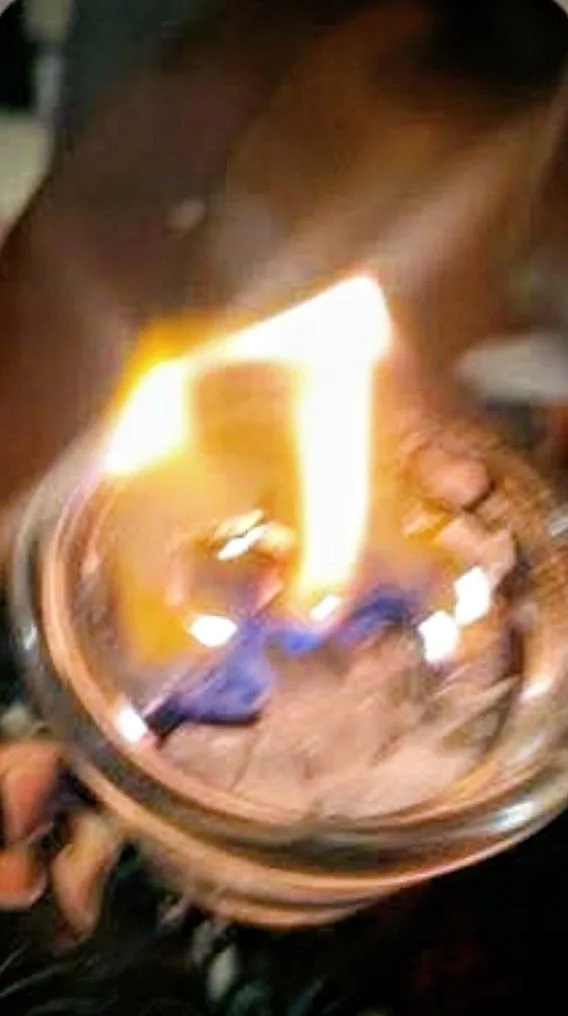
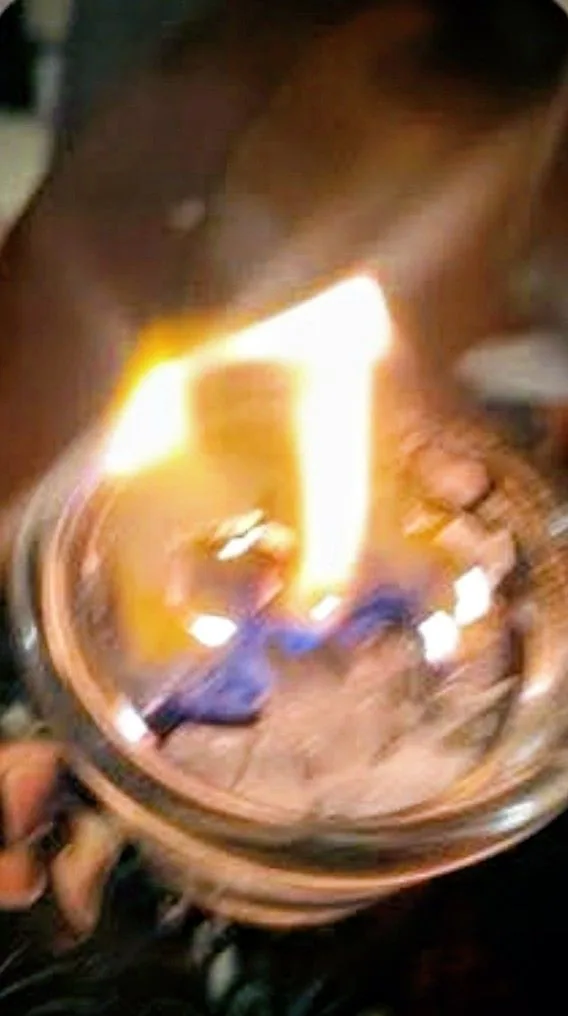
This week, one of the women in the Shadowborn circle completed a ritual from the work. Nothing dramatic was planned. No expectation of symbolism. She followed the steps, stayed present, and let the process unfold in its own way.
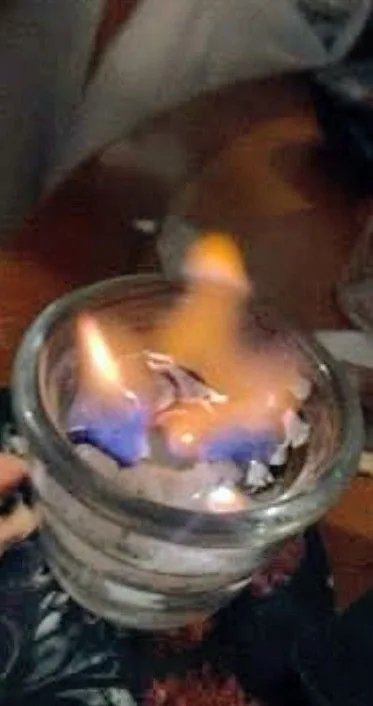
The flame grew stronger as the ritual progressed. Then it split. Then, near the end, the glass cracked.
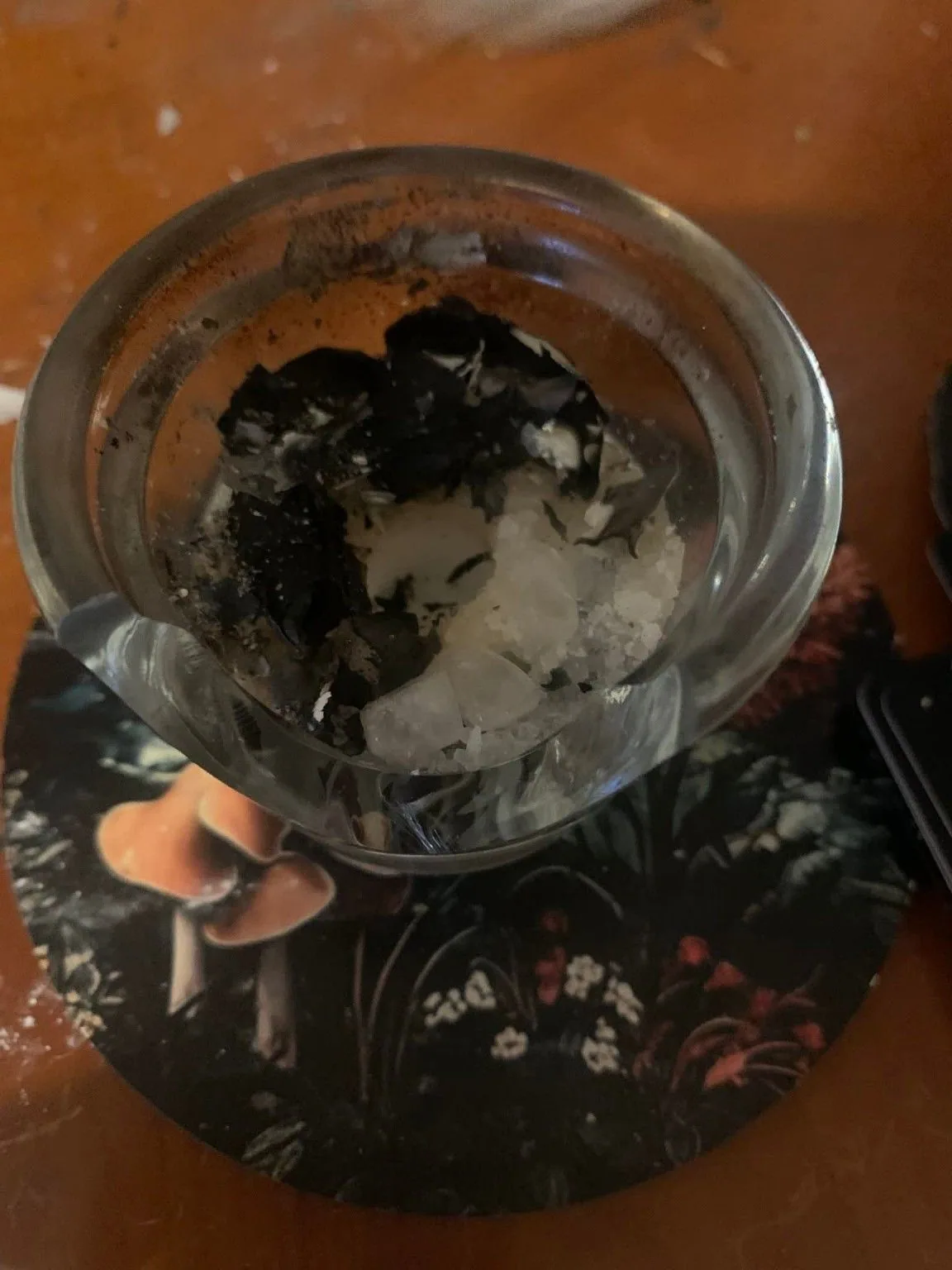
That crack matters.
Not because it was magical or because it fits a mythic narrative, but because it reflects something very real about transformation that most healing spaces avoid acknowledging.
In Shadowborn, we use containers intentionally. Glass. Fire. Structure. Time.
Containers exist to hold what’s being released so it doesn’t spill into overwhelm. They create safety. They allow grief, memory, anger, and truth to move without flooding the nervous system.
But containers aren’t meant to last forever.
There comes a point in real shadow work where the old structure, the identity, the coping mechanism, the version of you that learned how to survive, simply cannot contain the energy being released.
When that happens, the container doesn’t gently fade away. It breaks.
And that isn’t a mistake.
Flame work is often misunderstood. People associate it with purity or moral cleansing. That isn’t what it’s for here.
In this work, flame is about clarity. It’s the decision to stop carrying something forward. Not to erase the past. Not to rise above it. But to acknowledge that it no longer gets to live in your body.
Every flicker carries information. Memory moving. Emotion burning down to its essence. Truth stripping itself of story.
By the time the flame split, the work was already deep. Duality surfaced. Holding grief and release at the same time. Shadow and relief existing together. Nothing tidy. Nothing performed. Just reality unfolding.
The glass didn’t crack at the beginning. It didn’t crack in chaos. It cracked at the end.
That timing matters.
Rupture that happens after release isn’t collapse. It’s punctuation. It says this part is done.
The vessel had done its job. It held what needed holding. And then it gave way.
This is something I see again and again in real healing. Not the curated version. Not the aesthetic version. The kind that actually changes how you walk through the world.
People don’t shatter. They shed.
What breaks is the shape that could no longer contain them.
Evidence matters in Shadowborn. Not because healing needs to be dramatic, but because people are often taught to distrust their own experience unless it looks a certain way.
Transformation leaves traces.
Sometimes it’s a shift in behaviour.
Sometimes it’s a boundary you didn’t have to fight for.
Sometimes it’s exhaustion followed by calm.
And sometimes, it’s a cracked vessel sitting on the table after the fire goes out.
That crack doesn’t mean something went wrong.
It means something landed.
Shadowborn isn’t about forcing meaning onto experience. It isn’t about chasing symbols. And it isn’t about turning pain into performance.
It’s about creating conditions where the truth can move safely and trusting what happens when it does.
Some rituals end quietly. Some end with heat. Some end with a container that doesn’t survive the release.
All of them count.
And if you’ve ever felt like you outgrew the version of yourself that once kept you alive, if you’ve felt the pressure of becoming something that no longer fits inside old edges, then you already understand this moment.
Sometimes the work doesn’t end with a bow.
Sometimes it ends with a crack.
And that’s how you know it was real.
🌑🔥